
















Green Acres

    Fall 2008

    [ Send this article to a friend ]

    go to page: [ 1 | 2 ]

    Green Acres

    IIT Sets New Goals for Greening Main Campus

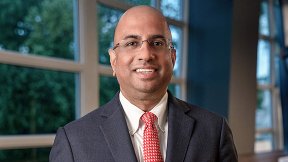
    “There are two inexhaustible resources,” says Joseph Clair (M.S. MAE ’95), who has joined IIT as its first director of campus energy and sustainability, “the sun—if it’s here, we’re here—and human ingenuity, which is infinite.”

    It’s an appropriate philosophy for a technology-focused university, where innovation and creativity work to advance knowledge and society. In an effort to be a better steward of the environment and to improve the quality of life at the university, IIT is introducing a new University Sustainability Policy this fall. Arriving on the heels of the launch of IIT’s Wanger Institute for Sustainable Energy Research, the plan will shepherd operating initiatives that will help the university become greener and more sustainable.

    “The program goal is to bring into our daily operating practices the innovation and creativity of our diverse student body, exceptional faculty, and talented staff,” says Vice President John Collins, whose Office of Business and Administration is coordinating the effort. “Joseph Clair is widely respected and brings to IIT a broad range of experience with energy and sustainability issues.”

    Improved sustainability and energy-efficiency is growing among United States universities. According to the Energy Information Administration’s Commercial Buildings Energy Consumption Survey, each year American universities spend approximately $2 billion on energy alone, in 2004 dollars. By going green, universities can significantly impact spending while increasing their pool of prospective students, who “have grown up in an era of environmental stewardship and are making discerning choices about whether the colleges they attend are green,” says Clair.

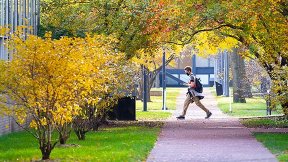
    IIT’s Main Campus alone spans 120 acres—a system of people, buildings, vehicles, landscaping, and utilities. With the population of the university community expected to grow in the coming years, so too will its demand for energy and resources. The University Sustainability Policy will encourage and support a variety of practices—both tested, common-sense approaches as well as new and updated technologies—that will define and support a university-wide vision for sustainability, enable IIT to better document and measure its work, and ultimately serve as a model of sustainable living for other communities.

    Greening a university, compared to other businesses and organizations, comes with its own unique set of challenges. First, and perhaps most fundamental, is determining a generally accepted definition of sustainability—“one man’s green is another man’s gray,” Clair says—which can differ from college to college based on varying disciplines and perspectives.

    Other key challenges include reducing the use of natural resources—namely water, steel, and masonry—as well as energy use in business and facilities.

    “We have a diversity of building styles—residential, commercial, industrial, retail—so it’s difficult to have a single energy-use strategy for the entire campus,” Clair notes. Whereas determining a base pattern of energy use in a typical residential building is relatively straightforward, for example, students live and work at different times of the day, which makes assessing energy needs in student residences more challenging. Similarly, as opposed to many commercial businesses, IIT has some facilities with 24-hour use patterns, including labs, as well as other special energy requirements.

    “We have to think at a micro level about how each building is used, and we have to use only the resources that we need. Our vision for sustainability has to be applied to everything at all levels of our operations,” he says. “If we do this we will increase the quality of life on campus, which advances our educational and research mission.”

    “If you consider the three components of sustainability—environmental, social, and economical—IIT will benefit in all three aspects,” says George P. Nassos, director of the Center for Sustainable Enterprise at IIT Stuart School of Business. As part of its mission, the CSE advises business leaders about how they can alter their business practices to be more sustainable, thereby improving the environment as well as their company’s bottom line.

    “By being environmentally sustainable, the university is utilizing fewer natural resources; if it’s social, we’re reducing our carbon footprint, which reduces climate change and impacts people, whether a change affects agriculture or rising flood waters. By using fewer natural resources, we are also being economically sustainable; we pay less, use less wattage, save on disposal, and prevent pollution.

    “If we look at the economic aspect even further, promoting and advertising our sustainability will contribute to attracting higher-quality students, which impacts our revenue and helps the bottom line. It’s good to do it, even if you don’t tell anyone, but even better if you do.”

    Clair says successful sustainability is well within reach for IIT. “IIT has so much knowledge in this area and sustainability here is inbred,” he says. “Also, we’re an urban school. If we can show that we can make sustainability work here, in a diverse community within the city, using a forward-thinking model, we can establish a standard for other small communities in the Chicago area and urban centers all over the world.”

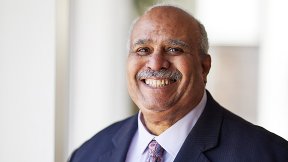
    A partner in developing a more sustainable IIT is the University Sustainability Committee. Formed two years ago, the committee, headed by Said Al-Hallaj, research associate professor of chemical and biological engineering, is an interdisciplinary collective of faculty working in sustainability-related research. The committee’s goal is to educate faculty about the various sustainability initiatives being developed as part of IIT’s operations and to provide input into the decision-making.

    “The most important message we emphasize is that sustainability shouldn’t be driven by saving costs only,” says Al-Hallaj. “As a university with a history in this area, we have to walk the walk. We must practice sustainability and be a leader for IIT stakeholders, the community, and the rest of the world.”

    The committee has been working with the university to replace worn-out IIT vehicles with vehicles that use the best new green technology, including pure-electric small vehicles for parking, general operations, and security staffs. IIT currently has three all-electric vehicles in use.

    Through these changes and other efforts, IIT aspires to be a “sustainable village”—a model for small communities that going green is feasible. This includes exporting successful strategies to other city neighborhoods, applying methods that have worked within IIT’s own grid within the cityscape to other areas. IIT plans to show the City of Chicago how planned upgrades at the McCormick Student Village student residence could be applied in the construction of a 2016 Olympic Village.

    Ironically, when such sustainability is fully integrated, whether on IIT’s campus or applied elsewhere, observers may have to look hard to find it. “The best sustainability is the things people won’t notice,” Clair observes. “We’ll see it on a balance sheet—in the things we don’t purchase.”

    go to page: [ 1 | 2 ]

    © Illinois Institute of Technology   3300 South Federal Street, Chicago, IL 60616-3793 312.567.3000
    Undergraduate Admission: 800.448.2329 || Graduate Admission: 312.567.3020   Emergency Information