Illinois Tech was founded in one era of technological transformation and is reshaping itself for another.
The university’s new three-college, six-school academic model is designed to provide clear academic homes while making interdisciplinary learning, research, applied experience, and career preparation easier to access. The thinking behind it is rooted in a history of educational innovation—and in a belief that the way knowledge is organized can shape what students are able to discover, connect, and create.
A University Born for a Changing World
Illinois Tech’s story began with a question that still matters today: What kind of education does a changing world require, and who should have access to it?
In 1890, Chicago was being transformed by industry, infrastructure, architecture, and new technologies. Frank Wakeley Gunsaulus imagined a school where students from all backgrounds could prepare for meaningful roles in that emerging society. Philip Danforth Armour’s support turned that vision into the Armour Institute, which opened in 1893 with programs connected directly to the needs of the age.
From the beginning, Illinois Tech’s purpose was not simply to teach technology. It was to help people understand, apply, and shape technological change.
The New Bauhaus: Connecting What Had Been Separated
In 1937, László Moholy-Nagy brought the New Bauhaus to Chicago.
The school challenged the idea that education should be divided into isolated crafts and rigid categories. Its students moved among materials, visual perception, science, technology, making, and human experience. Experimentation was not treated as separate from rigor; it was a method for developing it.
The New Bauhaus integrated disciplines, approached design holistically, and explored how technology could improve lives. Those ideas remain part of the Institute of Design’s work today.
We accept the challenge of technical progress with its recognition of social responsibility.
— László Moholy-Nagy
That principle is larger than design. It expresses an enduring Illinois Tech idea: technical knowledge reaches its greatest value when it is connected to creativity, judgment, ethics, and human purpose.
1940: Creating a New University
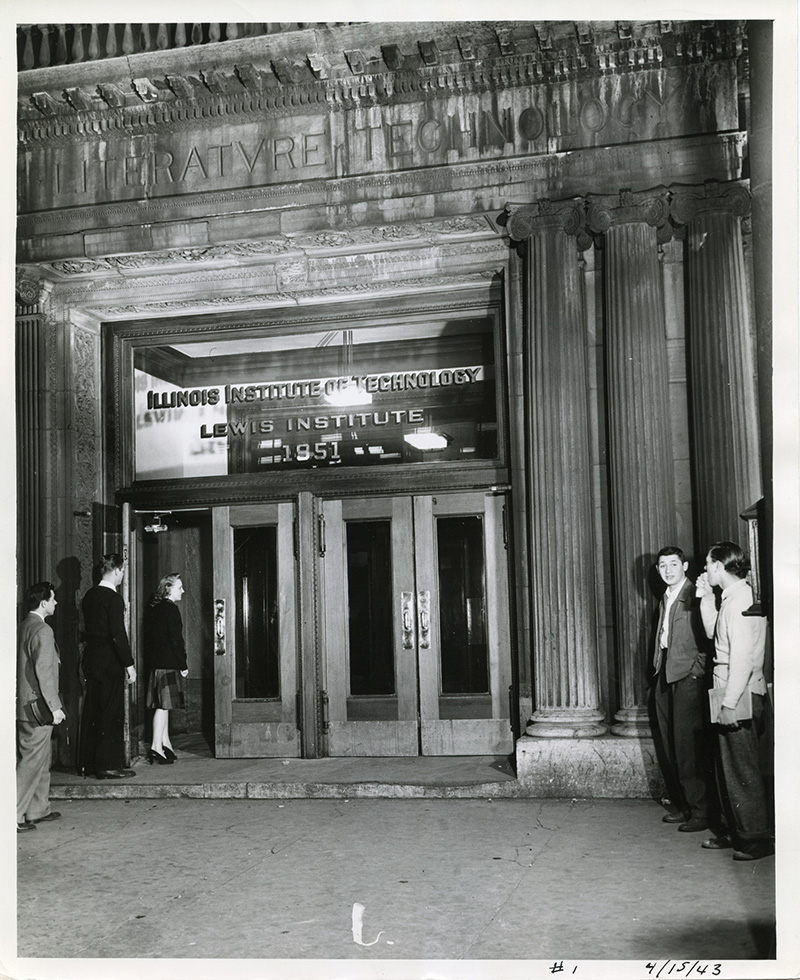
Three years later, Armour Institute and Lewis Institute joined to create Illinois Institute of Technology.
Armour brought a strong tradition of technological and professional education. Lewis brought strengths in science, engineering, liberal education, and civic access. Their combination created a university with broader intellectual reach and a stronger capacity to serve Chicago and the world.
The 1940 merger established a pattern that would continue across Illinois Tech’s history: distinctive traditions could retain their value while becoming part of something more connected.
The Institute of Design joined Illinois Tech in 1949. Chicago-Kent College of Law became part of the university in 1969, and Stuart School of Business added another dimension to the meaning of a technology-focused education.
Each development expanded the questions that Illinois Tech could ask—not only what can be built, but how it should be designed, governed, financed, communicated, and used.
From Foundations to a Connected Core
The Thinking Behind the Lens
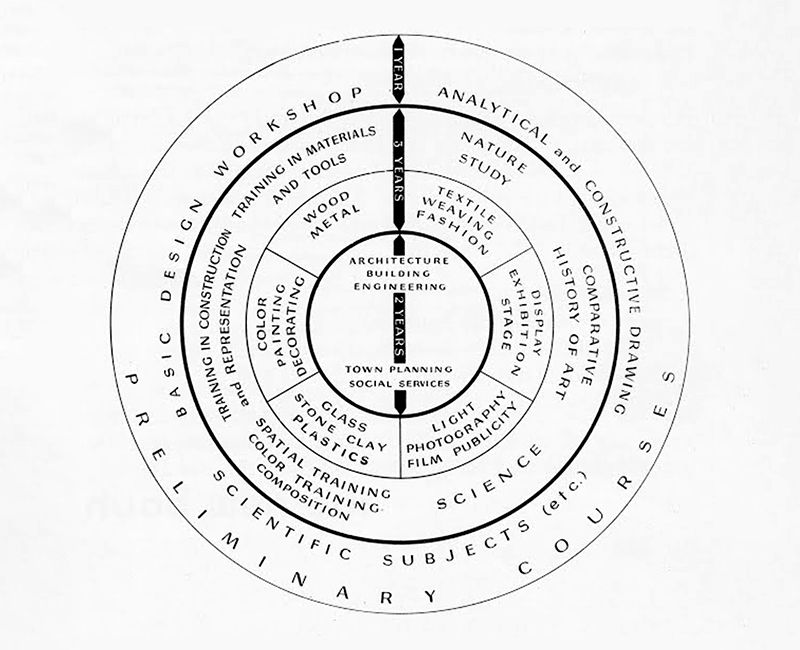
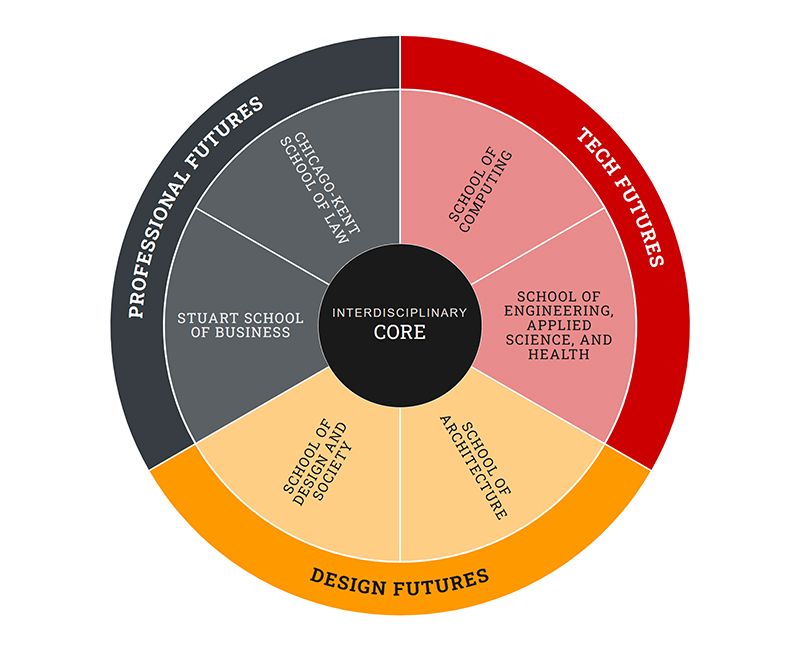
Nearly 90 years apart, these diagrams express a related educational idea: the way knowledge is organized shapes how students connect and apply it.
Moholy-Nagy’s New Bauhaus curriculum moved students inward from broad preliminary studies and experimentation with materials toward integrated professional and social practice.
Illinois Tech’s new academic model begins with clear disciplinary homes and creates pathways toward an interdisciplinary core—where research, applied learning, shared projects, and academic programs can connect across fields.
The models are different, but the principle endures: strong foundations should open possibilities rather than reinforce boundaries.