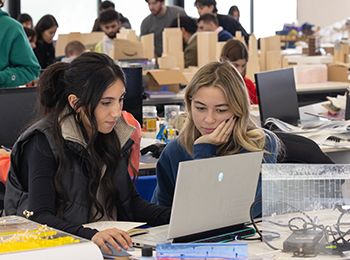
True innovation requires more than just technical capability; it demands a deep alignment with human behavior and environmental stewardship. The College of Design Futures at Illinois Tech connects the university’s design lineage with a profound sense of social purpose. This forward-looking college unites architecture, design, and strategic systems thinking into a single creative ecosystem, challenging students to analyze modern global complexities and build actionable solutions for the built environment.
What is the Academic Focus of the College of Design Futures?
The associated schools with the College of Design Futures include:
The key specializations within Design Futures include architecture, design, human-centered innovation, systems thinking, and the built environment.
Design Futures connects Illinois Tech’s historic, globally recognized strengths in architecture and spatial design with a progressive legacy of systemic experimentation and social purpose. Moving far beyond purely aesthetic formatting or isolated product prototyping, this collaborative environment combines two powerhouse schools to treat contemporary global challenges—such as rapid urbanization, resource scarcity, and structural climate shifts—as critical design provocations. Whether pursuing professional architecture degrees (B.Arch., M.Arch.) or multidisciplinary studies in human-centered design, emerging media, and public policy, students learn to reshape physical and institutional structures.
How Does the College of Design Futures Apply the Legacy of the New Bauhaus?
Rooted in the structural influence of the New Bauhaus—founded by László Moholy-Nagy in 1937—and re-engineered for the complexities of the twenty-first century, the curriculum utilizes studio and lab models to explore the intersection of human behavior, technology, and physical infrastructure. Working inside Ludwig Mies van der Rohe's iconic S. R. Crown Hall and utilizing our 14,000-square-foot Fabrication Center, students master advanced prototyping, digital fabrication, and human factors analysis to build cohesive systems, spaces, products, services, and experiences. Leveraging Chicago as an active living laboratory, Design Futures transforms abstract spatial and cultural theory into actionable, ethical design leadership—preparing graduates to guide corporate innovation sprints, manage large-scale civic developments, and direct sustainable planning practices.