Appellate Advocacy in Action: Chicago-Kent Hosts Arguments for U.S. Appeals Court
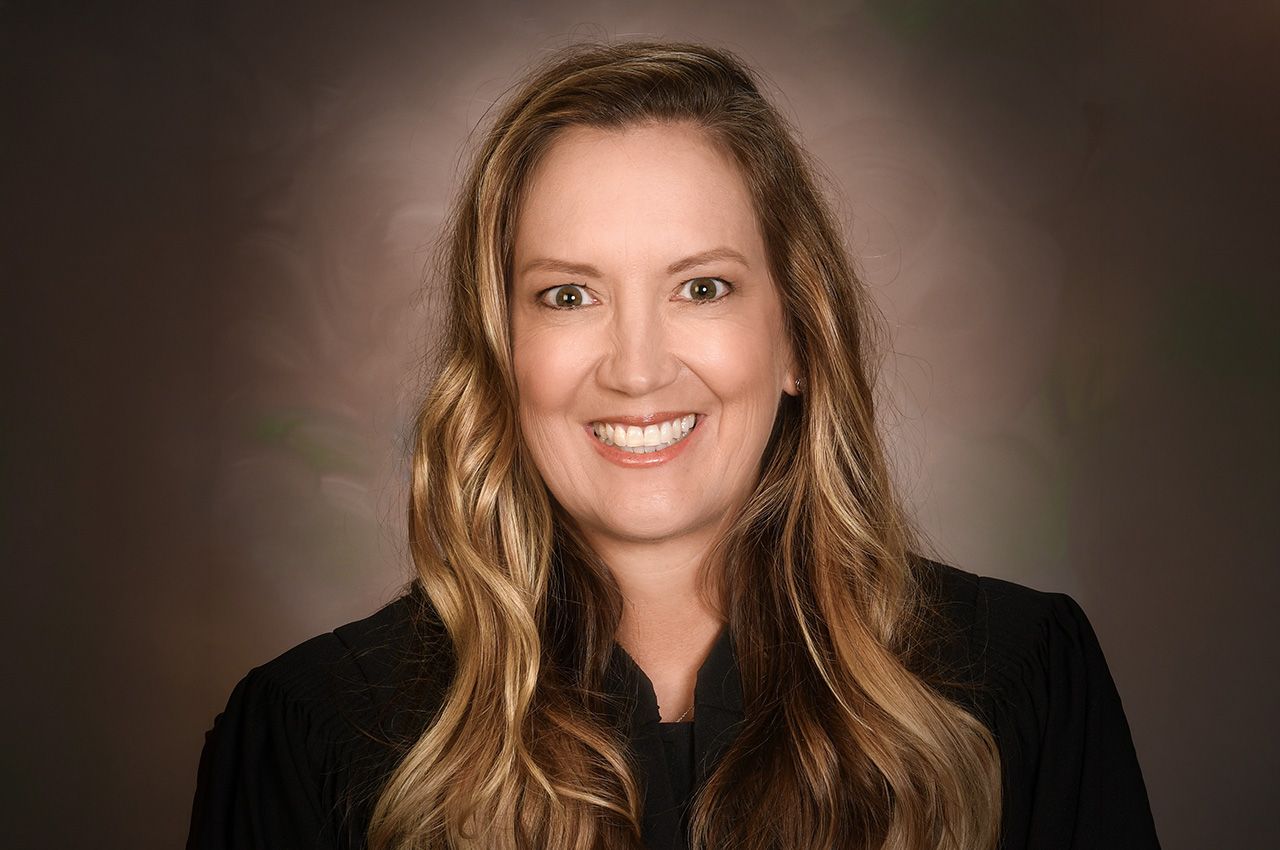
When Kimberly A. Moore, chief judge of the United States Court of Appeals for the Federal Circuit, returned to Chicago-Kent College of Law on October 6, 2026, she returned to a familiar place in a different role: presiding over actual arguments before her circuit of the U.S. Court of Appeals in the law school’s Judge Abraham Lincoln Marovitz Courtroom.
Moore taught at Chicago-Kent from 1997–99 and served as associate director of the school’s Intellectual Property Law Program. She returned as chief judge of the nation’s only federal appeals court that has nationwide, subject-matter jurisdiction and showed that directly to Chicago-Kent students.
“It meant a lot to be back,” Moore said. “I’m happy to see the law school, and especially the IP program, flourish.”
Chicago-Kent was one of six Chicago law schools to host arguments from the Federal Circuit of the U.S. Court of Appeals during a citywide session that took place from October 5–8. The court heard 32 appeals across Chicago, with cases involving patents, international trade, veterans’ benefits, federal employment, and other areas of federal law.
For students, the session offered a rare opportunity to see appellate advocacy firsthand. Rather than studying written opinions, they watched attorneys present arguments and judges challenge them with questions.
“The Federal Circuit is pretty inaccessible to us in Chicago, so getting to see it in session was special,” said Maya Chawla ’27.
After oral arguments, judges held a question-and-answer session along with their clerks. Students asked about topics ranging from work-life balance to how they prepare to hear cases.
Erin Kloostra ’27 said that she was lucky to have the opportunity to learn more about the judges’ experiences.
“It was invaluable to gain insight into the paths the judges took to get to where they are, and how a good advocate can flip a case,” Kloostra said.
Those conversations also help students explore legal fields that they may not have considered, Moore said. She said that students’ curiosity and fresh perspectives make the exchanges rewarding for judges, too.