

Paddling Through the Past: Teaching History Through Games
The Power of Storytelling
A love of storytelling inspired Ava Gray to create a game that allows elementary students to step into life along the waterways of seventeenth-century Chicago. Months of collaboration and creativity culminated in the game that will soon become a hands-on history experience at the Chicago Maritime Museum.
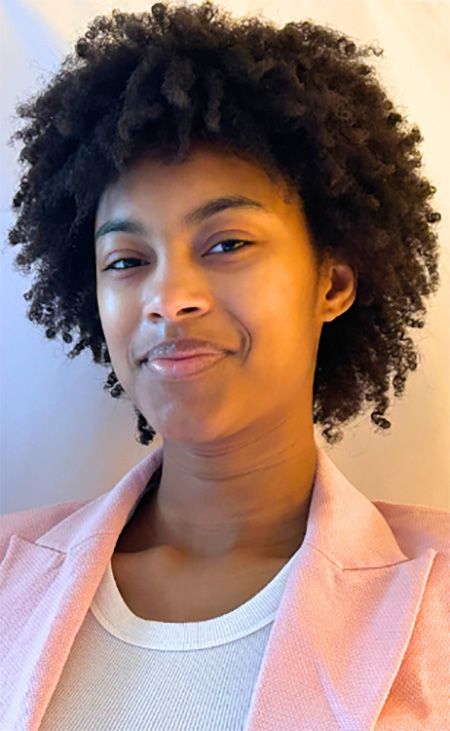
Ava Gray (BA 2nd Year)Ava Gray (BA 2nd Year) developed her love of storytelling at a young age through reading and writing, ultimately discovering that story has the power to connect people from all walks of life. She now credits film, music, and exploring the city of Chicago as her biggest influences. She says that her love for storytelling has only grown since enrolling at Illinois Tech as she has been able to explore the medium through game development.
Most recently, in collaboration with a team of three other students during her second year, Ava turned an often-forgotten part of Chicago’s past into an interactive game, letting children experience the city from the perspective of a Native American teen as it existed centuries ago.
“The thing about storytelling that I love is that it connects humans to each other,” says Ava. “In today’s day and age with social media and everything, it’s very easy to not feel connected to other people. But in reality there are so many of us here on this planet—someone can relate to your story.”
As a student in Stuart School of Business’ business administration program, Ava had the opportunity to enroll in a course called Game Design and Experiential Media Intro to the Professions. This course is a requirement in the university’s game production management program, and an elective option for students like Ava in other majors. Through this course, Ava channeled her passion for storytelling into a game that has now been brought to life at the Chicago Maritime Museum where kids can experience daily life along the waterways of seventeenth-century Chicago.
“It allows elementary students to experience life as a Potawatomi teen in the 1670s,” says Ava. “It is super important to teach kids about this time in history, and the game does that in a fun way. Students will learn to navigate waterways by canoe, Ojibwe vocabulary, canoe safety protocol, how to bargain with traders, and the social pillars of Potawatomi culture, as well as historical geographic terms pertaining to the Chicago portage area.”
At the beginning of the semester, Ava and her classmates learned that they would be working with a real-world client, the Chicago Maritime Museum, to produce a game, with one project ultimately chosen from the course for use at the museum. The museum provided a detailed design brief, which outlined target ages, learning objectives, and the historical themes that needed to be included.
With her team, Ava formed RiverCurrent Studios and dove headfirst into the creative challenge of building the game from the ground up. As project manager, she guided her team through the semester-long process, balancing deadlines, coordinating meetings, and ensuring each element—including story, artwork, and gameplay—came together seamlessly.
“I wanted to improve my project management skills,” Ava says. “We were all kind of thrown in there.”
Her team pitched to the Chicago Maritime Museum twice, once midway through the project and then again at the end. The initial pitch allowed the museum to provide critical feedback, giving the team the opportunity to implement changes and refine its ideas, polishing the game before the final selection. When Outrun the Currents was chosen by the museum, the moment meant more to Ava than just a grade.
“We all put so much energy toward this project over the semester,” says Ava. “We wanted it to be historically accurate, fun for the students, and really educational. To have our game be chosen, it was so amazing.”
For Ava, Outrun the Currents is more than just a successful course assignment—it’s a tangible expression showing why creating meaningful experiential stories matters.
“I’m really passionate about creating immersive experiences that connect others and expand their perspective beyond what their personal experience is,” she says. “On this project, I had amazing teammates, and as project manager I focused on creating an environment where all our, often differing, opinions were heard and equally considered. I did this by implementing a voting system for all big creative decisions such as the story beats, name, and color palette. I think this is what makes our game so amazing—it’s the culmination of the voices of a diverse group of creatives who meshed the truth of art with the truth of history.”
Looking ahead, Ava hopes to continue exploring storytelling through games, film, and music, drawing inspiration from the city around her.
“Chicago is a big inspiration” Ava says. “Opportunities honestly seem endless here, and that’s something I’m super grateful for.”