

All Illinois Tech faculty, staff, and students are required to complete the annual Emergency Evacuation & Life Safety training. This course provides learners with a clear understanding of what to do in the event of a fire or emergency evacuation. Outlined here are key takeaways from that training.
- When in doubt, call Public Safety at 312- 808-6300.
- Always follow instructions from First Responders and Illinois Tech Response Units
- Always report to the designated Emergency Assembly Area.
- Never re-enter the building until given the 'All-clear' from First Responders and Illinois Tech Response Units
Emergency Evacuation, Exits and Fire Safety Tips
Emergency evacuations can occur for a variety of reasons, including fires, hazardous materials, threats to the area, and more. These evacuations are designed to ensure the safety of everyone who may be impacted.
This short video highlights what to expect and your responsibilities in the event of an emergency evacuation on campus.
Knowing the location of your emergency evacuation routes and equipment is crucial to being prepared when disaster strikes. All Illinois Tech campus buildings are equipped with Emergency Evacuation Plans. These plans are typically posted near points of entry, stairwells, elevators, and common areas. It is encouraged that you review these plans in every building they visit so they know what to do in the event of an emergency.
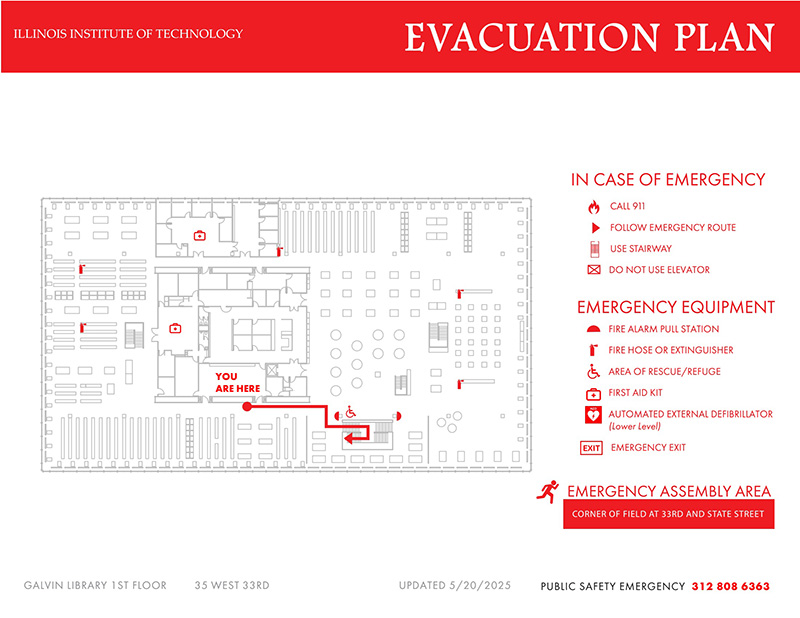
Emergency exits should only be used in the event of an emergency. Always use the closest exit when evacuating, even if an alarm sounds when in use.
Emergency exits are clearly marked doors typically equipped with illuminated exit signs, alarms, and doors that open outward. These exits ensure quick access to safety. It is essential that emergency exits remain unobstructed and fully accessible at all times.
Back to Basics
Some of us may have learned the essential fire safety practices in school or at home, including what to do if we encounter a fire. While these practices may seem simple, they are fundamental to ensuring we are prepared and know how to respond in the event of a fire.
These tips will help you make informed decisions during a fire and explain why they are so crucial for your safety.
- Never use an elevator during an emergency evacuation. Elevators can expose you to greater danger by stopping on fire-affected floors or even malfunctioning during an emergency.
- When checking a door during a fire, use the back of your hand to feel the door handle and surface. If the door is hot, it indicates the fire is on the other side. Do not open the door and find an alternative exit. If no other exit is available, contact Public Safety and inform them of your name and location, and wait for help to arrive.
- When moving from one room to another, always close the door behind you but leave it unlocked. This helps prevent the fire from spreading while allowing fire responders to conduct search and rescue efforts more efficiently.