Third Federal Judge Cites Law Professor’s Research in Legal Ruling

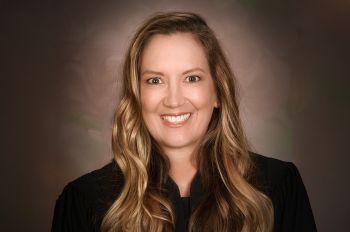
Innovative research by Chicago-Kent College of Law Professor Sarah Fackrell is proving helpful to federal judges who are adjudicating new types of intellectual property infringement cases in the internet era.
“Schedule A” cases involve one plaintiff who sues multiple defendants for infringement in a single lawsuit. Attorneys for patent holders lump the alleged infringers together on a list and submit the list to the federal court, where the attorneys also request extraordinary relief against all of them.
The defendants (the alleged infringers) are not identified by name but rather by their Amazon storefront name or similar designation. The plaintiff asks the court to freeze the defendants’ assets before the defendants are even informed of the lawsuit. The defendants are also generally served via email.
“There was a point where these kinds of requests were getting granted on a regular basis,” says Fackrell. “All the plaintiff had to do, it seemed, was slap a ‘Schedule A’ label on the case and then they got to play by a whole different set of rules.”
For years, Fackrell has researched and written about “Schedule A” litigation and the challenges these cases present for defendants, judges, and the legitimacy of the legal system. Now, federal judges are increasingly scrutinizing these cases and the extraordinary relief that plaintiffs request.
In CJB Global Imports, Inc. v. Schedule ‘A’ Defendants, a case in the Southern District of New York, the United States District Judge Naomi Reice Buchwald acknowledged that freezing defendants’ assets can severely limit their ability to defend themselves and questioned whether serving defendants by email would provide adequate notice.
“Plaintiff’s requested relief is far-reaching and would have substantial impact on the defendants before they are aware of this lawsuit,” Buchwald wrote. She later added: “Unsurprisingly, the literature tells us that ‘Schedule A’ cases often result in a default by defendants.”
Buchwald denied the plaintiff’s request for relief in its entirety and dismissed the case.
“This is a good example of how at least some judges have started pushing back and asking the plaintiffs to actually prove that they’re entitled to these extraordinary forms of relief,” Fackrell says.
Buchwald’s decision cited Fackrell’s paper, “The Counterfeit Sham”. It is the third time a federal judge has cited her work in a case of this type since August 2025.