

The Tools and Support to Succeed in Business Analytics
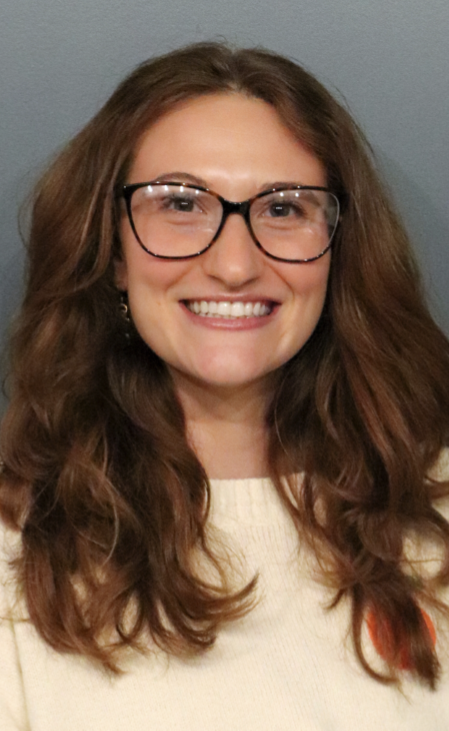
Market Research Analyst, Analytic Partners
For Rachel Lummis, liberal arts meet tech skills to build a foundation for a career in business analytics.
Rachel Lummis (M.S. Business Analytics ’25)With a liberal arts undergraduate degree, Rachel Lummis (M.S. Business Analytics ’25) was looking at graduate school to develop her skill set in business analytics to boost her career prospects.
“Every company collects and analyzes data to guide decisions, and I see this field as offering both job security and exciting opportunities,” she says. “I’m also a client-facing person who enjoys building relationships, so pursuing business analytics gives me the chance to combine technical skills with business intelligence, marketing analytics, and consulting.”
She adds, “I wanted to live and work in the Chicago area, and the Illinois Tech name has a lot of weight on a resume.” She chose the M.S. in Business Analytics program at Stuart School of Business.
The program’s courses are engaging, challenging, and applied, with professors bringing their own teaching styles and collaborative projects, says Lummis. “In addition to developing the technical skills, it is about understanding why it works and what it means,” she notes. “In a lot of these courses, your professor will teach you how to do it, such as how to write the code, and then you take what you’ve learned and apply it to a data set to build something from the ground up.”
Along with her courses, Lummis gained working experience with two internships. “I got the first one through a marketing professor’s connections and was a brand management and marketing analyst at a startup for ethical artificial intelligence consulting,” she says. The position included opportunities to learn about how a business is run, take on a variety of duties, and attend events and conferences with the company’s CEO and marketing manager.
In the second internship, she conducted marketing research for the marketing director of an innovation and accelerator hub. “I was using skills I had learned in class to produce reports and present to venture capitalists, and gained a lot of confidence from that,” she says.
Lummis also joined the Chicago Innovation Women’s Mentorship Co-op, where she had a mentor and made connections with startup founders to do freelance analytics projects to gain more hands-on experience.
“This program equips you with the tools and support to succeed,” she says. “I began with no background in coding or analytical platforms, but now I’ve developed a strong foundation in multiple applications that are directly relevant to real-world work.”
Completing her degree, Lummis launched her business analytics career by joining Analytic Partners as a market research analyst.