


Chemical Engineering (B.S.)
Gain essential foundational knowledge in chemical and biological engineering and the technical, professional skills to become a leader and innovator in the chemical process industry.
Learn How to Convert Raw Materials into Useful Products with Illinois Tech’s B.S. in Chemical Engineering
As one of the first chemical engineering programs in the country, Illinois Tech’s Bachelor of Science in Chemical Engineering has established itself as a pioneer in providing students with the technical and scientific knowledge and hands-on learning experiences to become leaders and innovators in the field. You will gain foundational knowledge and practical skills in chemical and biological engineering. Plus, you will also be able to align what you learn in this program with your unique interests, with the opportunity to narrow in on an area of study in one of our five specializations: energy/environment/economics (E3), environmental engineering, polymer science and engineering, bioengineering, and process design and operation.
Program Overview
The B.S. in Chemical Engineering is designed for students who are looking for careers in the chemical process industry (including chemicals, energy, environment, and pharmaceuticals) or who want to pursue graduate studies in the field. As a chemical engineering student, you will be immersed in a close student-to-faculty learning environment where you will dive into several topic areas including, but not limited to, fluid mechanics, biological science for engineering, thermodynamics, chemical reaction engineering, and more. This program is held on-campus and can be taken full-time or part-time with a completion time of four years (eight semesters) when taken full-time. Some summer courses are also available for incoming transfer students interested in the program.
Career Opportunities
The following are some of the careers that graduates of the B.S. in Chemical Engineering program can successfully pursue:
- Process Engineer
- Research and Development Engineer
- Project Engineer
Here are three of our students’ favorite courses.
CHE 416 Technologies for Treatment of Diabetes In this course, you will learn about the physiological control systems and the engineering of the external control of biological systems by focusing on an endocrine system disorder: diabetes. Among the topics you will explore include the effect of type 1 diabetes on glucose homeostasis and various treatment technologies for regulation of glucose concentration; the development of mathematical models that describe the dynamics of glucose and insulin concentration variations; blood glucose concentration measurement and inference techniques; insulin pumps; and artificial pancreas systems.
CHE 423 Chemical Reaction Engineering This course serves as an introduction to the fundamentals of chemical kinetics. You will explore the design, comparison, and economic evaluation of chemical reactors, with an emphasis on homogeneous systems.
CHE 406 Transport Phenomena You will examine the equations of change in different coordinate systems, including mass, momentum, and energy transport. Among the other topics you will explore include velocity distribution in laminar and turbulent flow; formulation and analytical solutions to the problems of viscous flow; molecular diffusion; and heat conduction and convection.
Admission to all undergraduate programs at Illinois Tech is evaluated via a holistic approach that takes various factors under consideration, including your high school performance and essays. Your choice of major will impact this process as well, because each major has its own criteria for admission.
To learn more about our admission selection process, recommended high school coursework, and our admitted student profile, please visit our admission website.
Tuition and Fees
To learn more about the university’s general tuition and fees, visit the Student Accounting website.
To get a more in-depth idea of the tuition and fees for the B.S. in Chemical Engineering, you can utilize the net price calculator tool.

Kylie L. Says...
“When I learned about being accepted for my first internship, I was ecstatic. It was right after my first year of college. It made me realize how excited I was to pursue a career in science and engineering.”
—Kylie Lancor (CHE 4th Year)
Featured Faculty
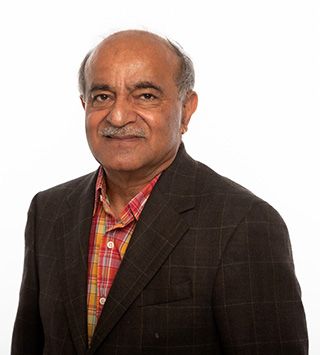
Sohail Murad

Donald J. Chmielewski

Victor H. Perez-Luna

Abigail Gunderson says Illinois Tech helped her develop an innovation-focused mindset.
Abigail Gunderson (CHE ’22)
Kylie Lancor’s fun start to college paved the way for four years of success.
Kylie Lancor (CHE 4th Year)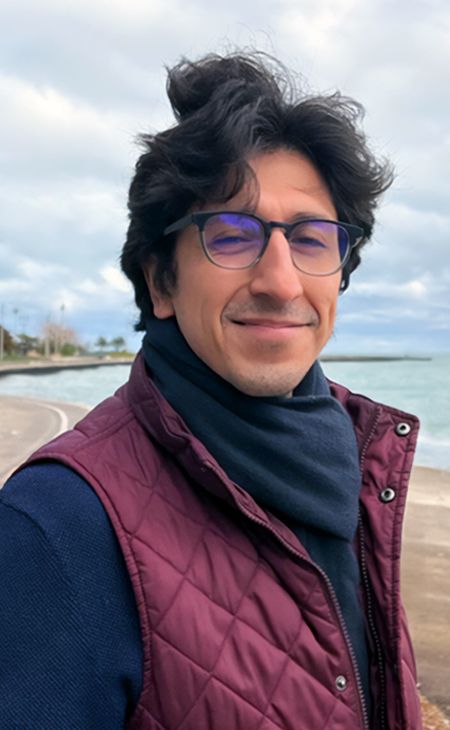
Using data to create better conversations.
Oscar Guzmán (CHE ’18)
Through IPRO and undergraduate research, Derek Bergstedt prepares for a chemical engineering career.
Derek Bergstedt (CHE, M.A.S. CHE 4th Year)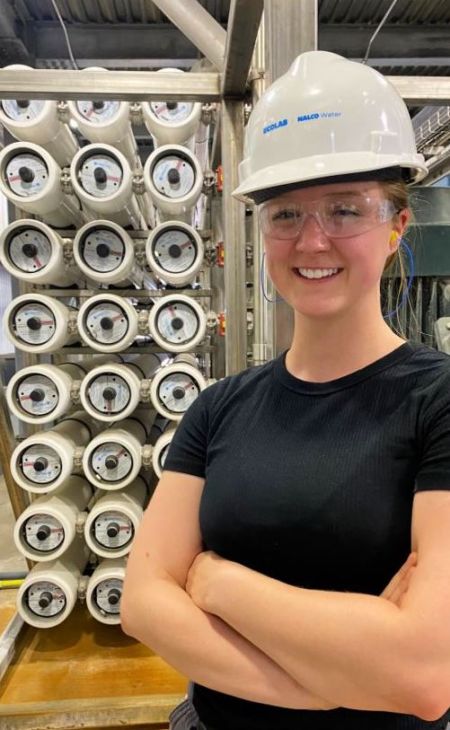
Lizz Elliott received a United States Department of Energy scholarship to continue her nuclear energy research.
Lizz Elliott (CHE 4th Year)
As a student president, Jessica Forbes is building the skills to one day run her own business.
Jessica Forbes (CHE ’22)The Chemical Engineering Program offers five specializations:
Energy/Environment/Economics (E3)
Frequently Asked Questions (FAQs)
How much math and physics are required for a B.S. in Chemical Engineering?
Math and physics are the basis of engineering, and students are required to take four mathematics courses during the bachelor's in chemical engineering program (Calculus I, II and III plus differential equations) and two physics courses.
What courses will I take during the B.S. in Chemical Engineering?
The chemical engineering curriculum at Illinois Tech contains a combination of coursework and professional training. Some sample courses include Fluid Mechanics, Thermodynamics, and Process Modeling. Since engineering is a team effort, the program develops the student's ability to work effectively as a team member. Laboratory course and capstone design course projects are conducted by teams of students.
Do you need a master’s degree to be a chemical engineer?
A master’s degree is not necessary to develop a good career in chemical engineering. Upon graduating from Illinois Tech's B.S. in Chemical Engineering, students are prepared for careers such as chemical engineer, manufacturing engineer, or design engineer.
Receiving a master's degree can open more opportunities if a student is interested in furthering their education. Illinois Tech's Master of Science in Chemical Engineering prepares students for more senior roles in chemical engineering.
Get In Touch
For more information about the B.S. in Chemical Engineering program, please contact chbe@illinoistech.